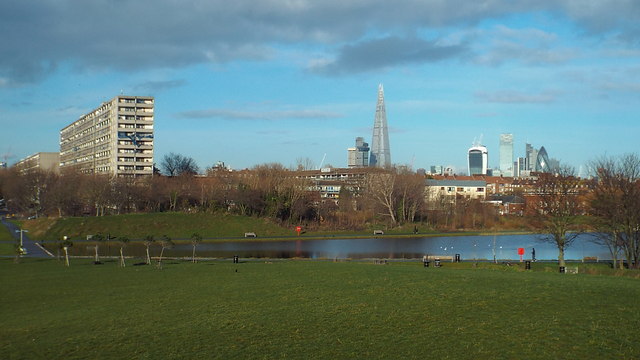
About Dog Walking in Southwark
Southwark is one of the densest and most varied of the inner London boroughs, with a housing stock that runs from period terraces in Dulwich and Camberwell to high-rise estates in Elephant and Castle, riverside developments along Bermondsey and converted warehouse flats across Bankside. The population leans young and working-age, with a median age in the mid-thirties and a significant share of households living in social housing flats and maisonettes. Around three quarters of the borough's homes are flats of one kind or another, and that single fact shapes the dog walking market more than anything else. Most owners here do not have a garden, the working day is long, and even the keenest dog owners often need someone reliable to bridge the middle of it.
The borough's working population leans heavily toward central London office jobs, creative industries and hybrid working arrangements, with strong commuter flows from the Jubilee, Northern and Bakerloo Lines feeding into the City, the Shard and the South Bank. That working pattern, combined with the housing mix, generates two clear types of demand. Flat-based households across Elephant and Castle, Bermondsey and Peckham generate steady demand for shorter midday solo walks and small group cover, while the more settled family streets of Dulwich and Camberwell lean toward longer route-based group walks for active dogs. Both sides of the market run on consistent weekday cover rather than ad-hoc weekend bookings.
Typical Dog Profiles and Walking Patterns
The most common profile across the dense northern and central parts of the borough is a flat-dwelling companion dog or smaller rescue, paired with a young professional or working family whose schedule makes a midday walk impossible without help. French Bulldogs, English Bulldogs, smaller crossbreeds and city-suited rescues dominate the flat-based market through Elephant and Castle, Bermondsey and Bankside. Active family dogs in the more residential southern parts of the borough generate longer group bookings, particularly around Dulwich, Camberwell and the streets close to the larger parks.
Group walks of three to four dogs are the most common product, though local park-specific rules around Dulwich allow up to six dogs with three on lead, which gives experienced walkers some additional flexibility in that part of the borough. Solo walks make up a meaningful share of demand, particularly for older dogs, reactive dogs and puppies still building confidence on Southwark's busy streets. Most local walkers will want to meet a new dog and ask carefully about temperament, recall and tolerance for other dogs before agreeing to fold them into an existing group, and that screening matters here particularly given how busy the central parks can become through the working day.
Popular Walking Locations
Southwark Park is the everyday workhorse of the borough's dog walking market in the north, with sixty-three acres of meadows, mature trees and a Victorian bandstand drawing a steady flow of regulars across the working day. The park works well for both group and solo walks, with restrictions around children's play areas and lead requirements available on request from park staff. Burgess Park sits to the south of Elephant and Castle and is one of London's larger reclaimed parks, with a substantial lake, open meadow and proper distance for energetic dogs, though dogs are excluded from the marked sports pitches and several of the formal zones.
Dulwich Park gives walkers a more historic feel with its Victorian boating lake, formal paths and mature trees, and operates a specific rule allowing up to six dogs in a group with three on lead, which is one of the most useful local nuances for walkers operating in this part of the borough. Myatt's Fields Park, in the borough's western corner, offers an enclosed exercise zone alongside tennis courts, which makes it a practical option for walkers needing more controlled space. Goose Green provides a smaller residential-adjacent option in Camberwell, and Elephant Park, the newer green space within the Elephant and Castle regeneration scheme, includes water features where leads are required. Each of these spaces has its own rhythm, and good local walkers tend to rotate between them rather than relying on a single park.
Local Requirements and Standards
Southwark enforces dog fouling rules through fixed penalty notices of £100, with all dog mess required to be cleared immediately and disposed of in standard park or street bins. The borough generally allows up to six dogs per walker, with site-specific rules layered on top of the standard expectation, including the well-known three-on-lead requirement at Dulwich Park. Dogs are banned from children's play areas, water features and other designated zones, and authorised officers can require dogs to be put on lead if they are causing nuisance. The borough has also been actively reviewing additional Public Spaces Protection Orders covering antisocial behaviour on housing estates and roads, which means enforcement signage and rules can shift over time and walkers operating across multiple sites need to keep their knowledge current rather than treating any single set of rules as permanent.
Beyond the rules, the markers of a properly set up dog walker in Southwark are the same as elsewhere in London. Public liability insurance is essential because it covers accidents, damage and incidents involving other dogs or members of the public, and most reputable insurers tie cover to a stated maximum group size that aligns with the borough's six-dog allowance. A DBS check matters because walkers routinely hold keys and enter homes unaccompanied, and that is the dominant pickup pattern across the borough's high-rise estates and converted flats. Pet first aid training is the other meaningful credential, particularly for walkers using Burgess Park's lake, the busier sections of Southwark Park and the Thames-adjacent routes where heat stress, paw injuries and the occasional water incident are all more likely than on quieter residential paths. Membership of a professional body such as NARPS UK, willingness to share references, and a clearly stated cap on group size are all reasonable things to ask about before booking, and any walker worth using will be comfortable answering all of them. In Southwark specifically, asking how a walker handles the Dulwich Park three-on-lead rule is also worth doing if the dog will be walked there regularly.
Neighbourhood Insights
Peckham Rye generates a high concentration of demand from working-age commuters in flats and converted houses, with the proximity to Peckham Rye Park supporting both shorter midday solo walks and longer group bookings. Puppy socialisation walks are particularly common here, with first-time owners in flats often turning to professional walkers for both exercise and structured social contact for younger dogs. Elephant and Castle generates a different pattern altogether, with the cluster of high-rise developments and the Northern Line commuter base driving a heavy concentration of midday solo cover and shorter group walks built around tight pickup windows.
Bermondsey shares some of the high-rise profile around the riverside developments and the regenerated streets close to the Thames, with steady demand for solo walks tied to short pickup-and-return schedules through the working day. The streets close to Southwark Park work well for walkers who can build longer routes into the local park rather than driving across the borough. Dulwich and Herne Hill generate a more settled family-led demand pattern, with longer route-based group walks the dominant product and a base of regular weekly clients rather than short-notice bookings. Across all of these areas, the underlying driver is the same: a working week long enough that even owners who plan to walk the dog themselves often end up needing reliable cover.
Seasonal Considerations
Southwark's parks fill quickly in good weather, and the lido and event programming at Southwark Park can make group walks noticeably harder to manage through the summer months. Good local walkers tend to push group walks earlier in the morning or shift toward Burgess Park and the quieter southern parks when the central spaces get too crowded. Heat stress is a real concern on the more exposed sections of Burgess Park and the lake-adjacent paths, and walkers covering the borough properly will adjust pace, distance and route choice through the warmer months rather than running their usual schedule unchanged. The Thames towpath gives walkers useful water-side options on hot days, though footfall and tidal mud both shape how those routes can realistically be used for group walks.
Winter brings the opposite challenge. Shorter afternoons push group walks earlier in the day, and the lower-lying sections of Burgess Park and the towpath routes churn up quickly after heavy rain. The better-lit paths through Myatt's Fields and the residential loops around Elephant and Castle pick up much of the load when the bigger spaces are too wet or too dark to use cleanly. Good local walkers will keep a set of well-lit backup routes for the days when the main spaces are difficult, and ongoing changes to the borough's PSPO framework also mean walkers should keep an eye on signage and council communications rather than working from a fixed mental map of where the rules apply.
Areas covered: Peckham, Elephant and Castle, Bermondsey, Dulwich, Camberwell, Rotherhithe, Bankside
Dog Walking Prices in Southwark
All prices below are approximate and intended as a general guide. Individual walkers set their own rates based on experience, services offered and the specific needs of your dog.
Typical price ranges
- •30-minute group walk (per dog): £12 to £18
- •60-minute group walk (per dog): £15 to £25
- •30-minute solo walk: £15 to £25
- •60-minute solo walk: £25 to £40
- •Monthly package (5 days per week): £300 to £500
Each provider sets their own rates. Contact dog walkers directly to confirm current pricing and availability. Weekend, evening and bank holiday walks often carry a small surcharge or premium rate.
Check individual profiles for current availability and multi-dog rates.
How It Works
Find trusted providers in your area in 3 simple steps
Select your borough
Use the dropdown above to filter by your local area
Compare providers
View profiles with ratings and Google reviews
Contact directly
Request quotes or book directly with providers
Dog Walking in Other Boroughs
Browse providers across London by borough
Dog Walking in Barnet
Browse providers in your area
Dog Walking in Bexley
Browse providers in your area
Dog Walking in Brent
Browse providers in your area
Dog Walking in Camden
Browse providers in your area
Dog Walking in Ealing
Browse providers in your area
Dog Walking in Greenwich
Browse providers in your area
Dog Walking in Hackney
Browse providers in your area
Dog Walking in Hammersmith & Fulham
Browse providers in your area
Dog Walking in Islington
Browse providers in your area
Dog Walking in Kensington & Chelsea
Browse providers in your area
Dog Walking in Kingston upon Thames
Browse providers in your area
Dog Walking in Lambeth
Browse providers in your area
Dog Walking in Lewisham
Browse providers in your area
Dog Walking in Merton
Browse providers in your area
Dog Walking in Richmond upon Thames
Browse providers in your area
Southwark
Current borough
Dog Walking in Sutton
Browse providers in your area
Dog Walking in Tower Hamlets
Browse providers in your area
Dog Walking in Wandsworth
Browse providers in your area
Dog Walking in Westminster
Browse providers in your area
Frequently Asked Questions
Common questions about finding providers in your area
Explore Other Pet Services
Find trusted professionals for all your pet care needs
START YOUR SEARCH
Ready to Find Your Perfect Dog Walkers?
Browse our curated dog walking in Southwark, all highly rated on Google.
All Dog Walking in Southwark