The Best Dog Walks in Lambeth
A guide to the parks and commons that make Lambeth one of South London's better boroughs for dog owners, and how to choose between them.
Lambeth stretches from the river at Vauxhall down through Kennington, Brixton and Herne Hill, then keeps going south through Tulse Hill until it brushes the edge of Streatham. By the time you reach the bottom of it the borough feels like a different city from the one it starts in. The dog walks reflect that. There are flat, accessible commons near the tube, hilltop parks with proper views, formal Victorian gardens, and small neighbourhood spaces that locals quietly rate above the better-known parks down the road.
What follows is not a complete list. Lambeth has more than seventy parks and green spaces, and a comprehensive guide would lose its point. These are the walks that reward you for going out of your way. A few are obvious. A few are deliberately not.
Brockwell Park
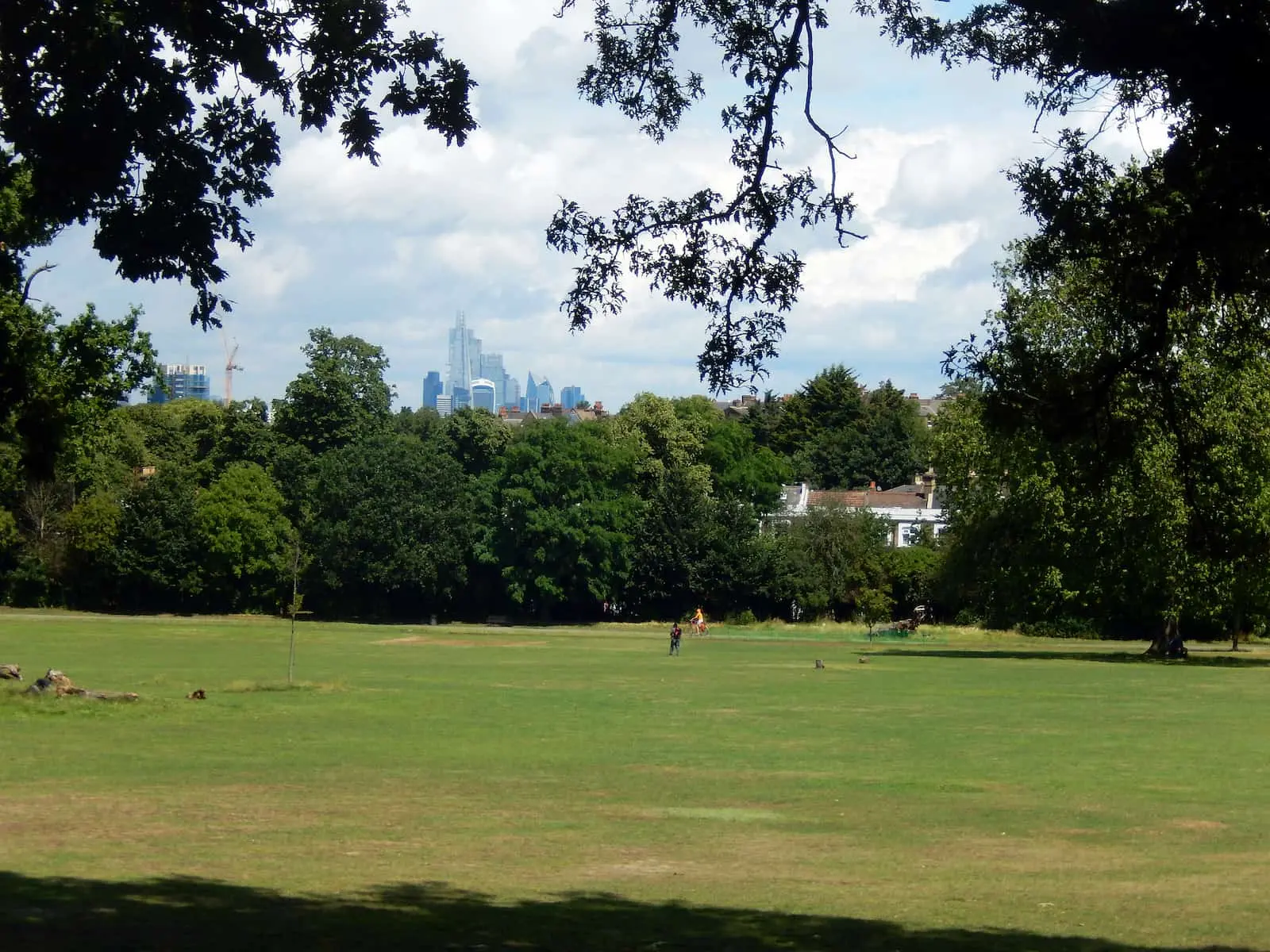
Brockwell Park is at its best in spring, when the slopes green up and the whole place feels a little softer around the edges. It sits between Herne Hill and Tulse Hill on a long rise from Norwood Road up to Brockwell Hall, with open meadows on the lower slopes, woodland and ponds in the middle, and a flat plateau at the top with views across to the City. On a clear morning, the skyline sits just above the treeline and gives the walk a proper sense of lift.
Most of the park is off-lead, with the exception of the walled garden near the lido and the area around the children's playground. The lower meadows are where dogs gather in the mornings, and by eight on a weekday you'll usually find a friendly little cluster of regulars on the flat below the BMX track. By ten on a Saturday it can be busy enough that smaller dogs prefer the upper plateau.
Every May and June, the park hosts the Brockwell Live series of music festivals, which between them take over roughly a quarter of the park for several weeks once setup and teardown are counted. Local campaign groups have spent the last few years pushing back on the scale of these events and the state the park is left in afterwards, and the dispute has been through the courts more than once. For most of the year none of this affects the dog walking. For the festival window in late spring it materially does, particularly on the eastern side of the park, and Ruskin Park, Streatham Common or Norwood Park are the better choices over that stretch.
Nearest station: Herne Hill. Off-lead throughout except around the lido, walled garden and playground. The lower meadows drain slowly after heavy rain. The Brockwell Park Café near the Norwood Road entrance is dog-friendly outside. The Saturday parkrun starts at 9am from the top of the hill and brings a brief surge of foot traffic.
Streatham Common and The Rookery
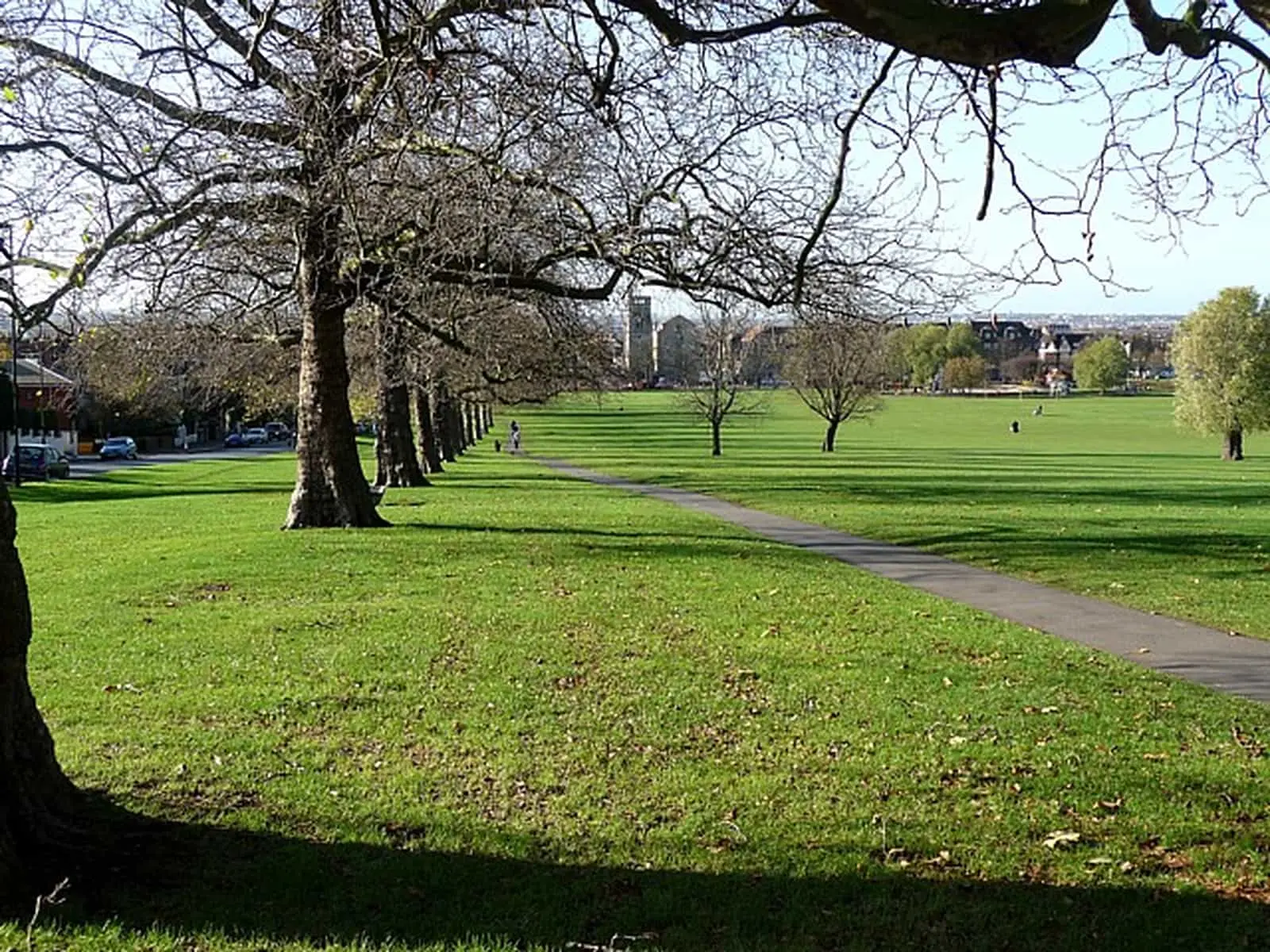
The main path across Streatham Common, looking south toward The Rookery.
Streatham Common is one of Lambeth's better spring walks, when the grass starts to thicken and the woodland edges feel less bare than they do in winter. It's a long sweep of open common rising from Streatham High Road, and at the top sits The Rookery, a formal garden that almost no one visiting Lambeth seems to know about.
The Rookery began as a private spa estate in the seventeenth century and opened to the public in 1913. It has the quiet, slightly secret quality of gardens that grew out of someone's house rather than being designed for crowds. There is a White Garden, planted entirely in white flowers, that began with a Victorian wedding and has been kept that way since. Dogs need to stay on the lead inside The Rookery, partly to protect the planting and partly because the garden is small enough that an off-lead dog at speed would feel like a different kind of place.
The common itself is fully off-lead. The Capital Ring also passes through here, so the walk can easily be extended if you want something longer.
Nearest station: Streatham Common. Off-lead on the common, on-lead in The Rookery formal garden. The Rookery Café at the top is reliably dog-friendly outside.
Clapham Common
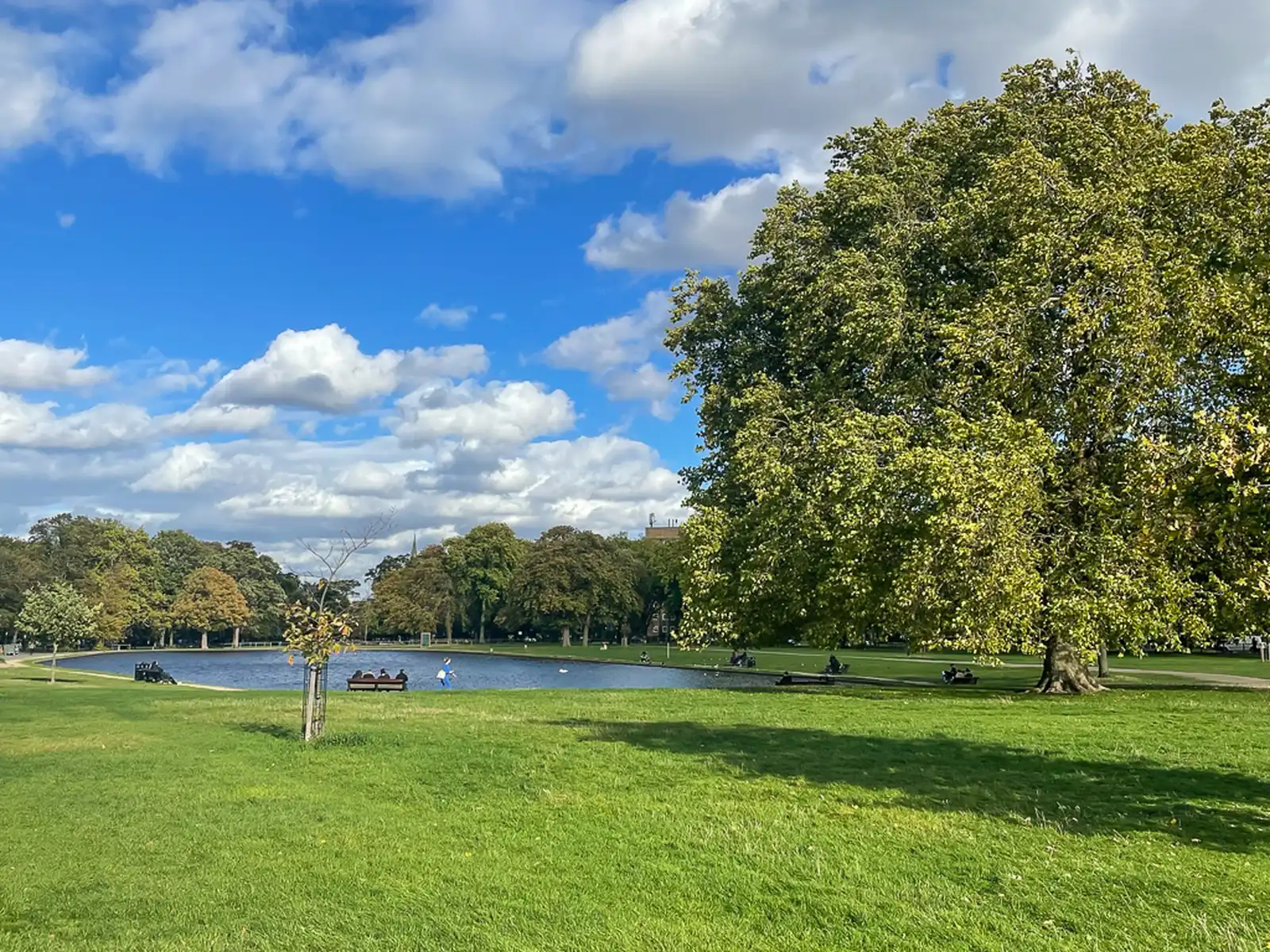
Clapham Common is the obvious one. It is flat, easy, and very busy. On a Saturday morning between nine and eleven the central grassland near the bandstand is full of dogs, and the dynamic is more park-as-event than park-as-walk. For a confident, sociable dog this is excellent. For a nervous one, the perimeter paths are better.
The common is technically split between Lambeth and Wandsworth, but the dog rules are consistent across both sides and dogs don't read maps. The three ponds in the centre, including Long Pond and Mount Pond, are the most useful navigational anchors. Off-lead is the default across most of the common, with on-lead near the play areas.
What makes Clapham worth choosing on a particular day is the social side. If a young dog needs to meet other dogs, or an only dog needs to remember that other dogs exist, Clapham Common at ten on a Sunday will solve it.
Nearest stations: Clapham Common, Clapham South or Clapham North. Off-lead across most of the common, on-lead near play areas. The Windmill on the Common is dog-friendly inside.
Ruskin Park
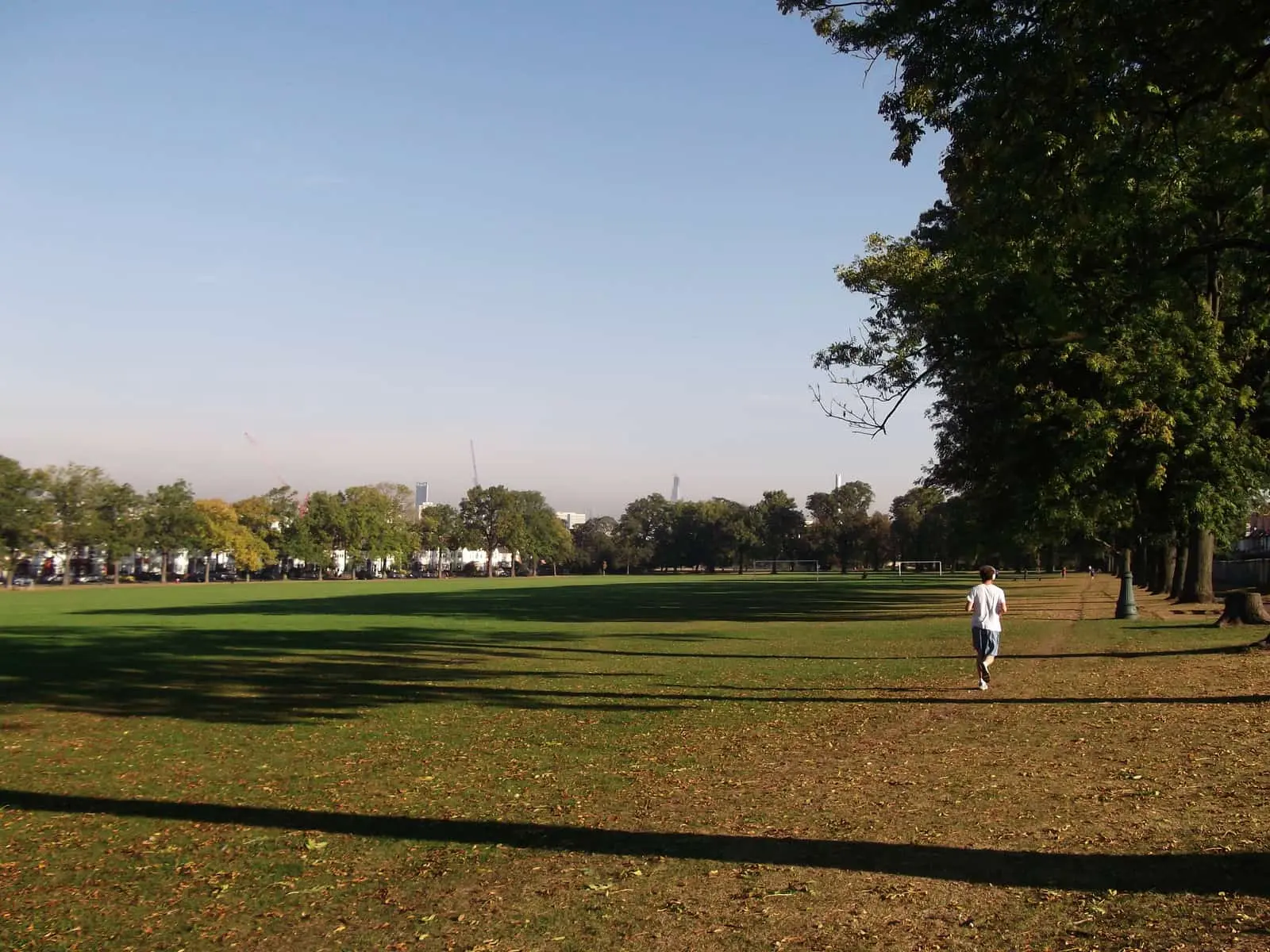
Ruskin Park is the alternative when Brockwell is too busy. It sits between Herne Hill and Denmark Hill, and because it's smaller and quieter than Brockwell, it tends to stay calm even on a sunny weekend. Fourteen hectares is enough for a real walk without ever feeling like a destination.
The park is named after John Ruskin, the Victorian writer and critic, who grew up nearby and wrote about the area's "wild beauty" before most of it became London. There is a small terracotta sundial in the central garden that commemorates Mendelssohn staying at one of the grand Denmark Hill houses that the park eventually absorbed. Neither is the reason to come, but both give Ruskin Park more history than its size suggests.
The central grassland is off-lead and big enough for a proper run. From the lower playing fields, the sightline north opens up to show the central London towers in the distance. The park sits next to King's College Hospital and the Maudsley, and a steady flow of hospital staff, patients and visitors uses it through the day, which is part of why it stays animated without ever feeling crowded.
The other quiet advantage is that Ruskin Park doesn't host the large festivals that close parts of Brockwell for chunks of late spring. If a regular morning walk matters, this is the more reliable choice between May and June.
Nearest stations: Herne Hill or Denmark Hill. Off-lead in the central grassland, on-lead near the playground. Dog-friendly café near the bandstand.
Kennington Park
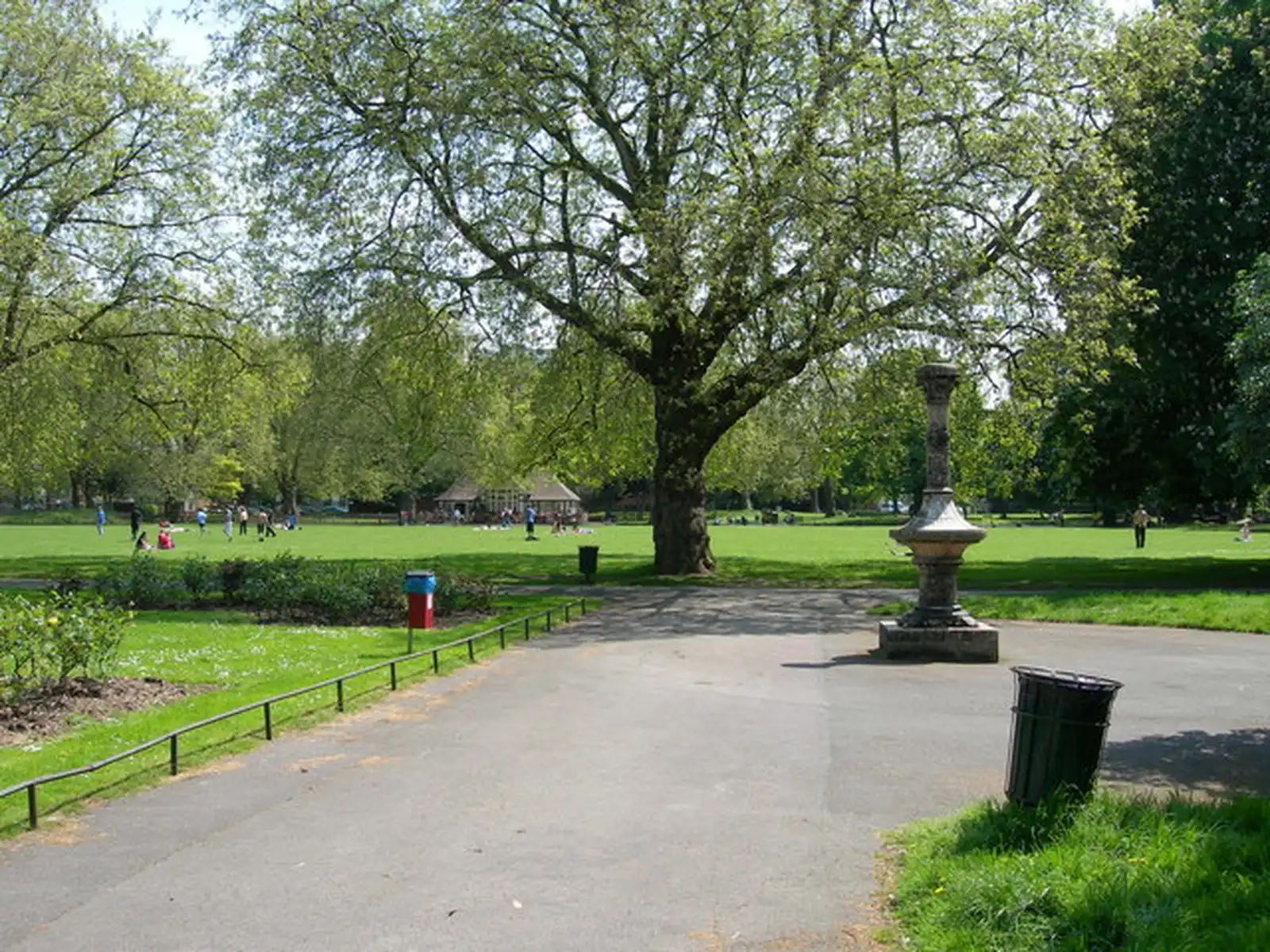
Kennington Park is the city option. It sits between Oval and Kennington stations and serves the dense residential strip from Vauxhall up to the river. It is not a destination walk. It is a working park for people who don't have the time or transport for Brockwell or Clapham on a weekday morning, and on that brief it does the job properly.
Sixteen hectares is enough for a forty-minute loop without doubling back. The central grassland is off-lead. The formal bedding gardens and rose garden are worth slowing down for, particularly in late spring. There are tennis courts, a children's playground and a small café, which means the park stays animated through the day rather than emptying out between school runs.
For dog owners in north Lambeth, Kennington Park is the answer to the question of where to take a dog before work. Anything more ambitious needs a bus or a train.
Nearest stations: Oval or Kennington. Off-lead on the central grassland. No on-site café worth diverting for, but plenty of options on Kennington Road.
Myatt's Fields Park
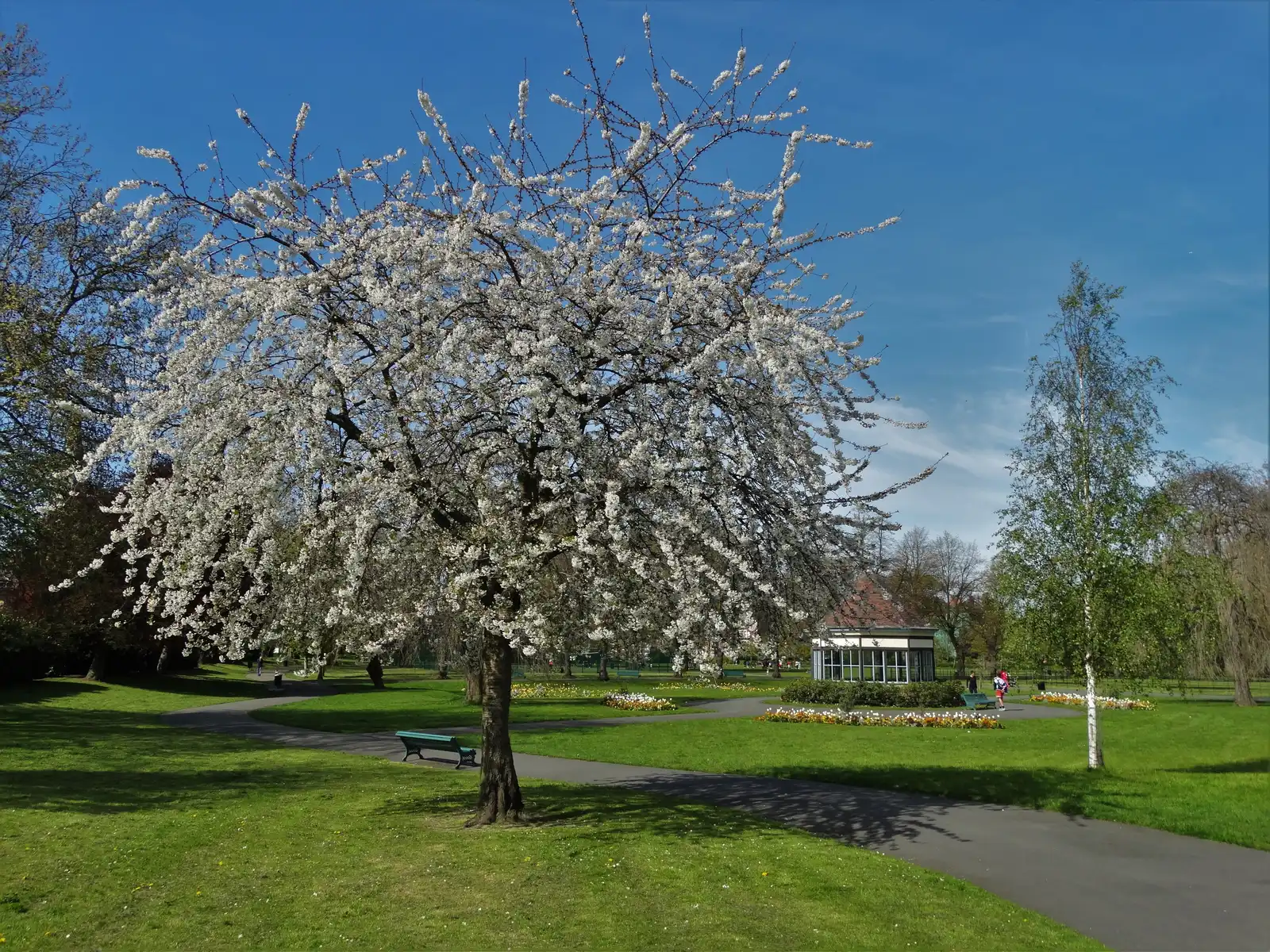
The pavilion at Myatt's Fields in late April, with the park's cherry tree in full blossom.
Myatt's Fields is the dog walker's park. It is small enough that it never appears on the lists of South London's best green spaces, and it has something most of the better-known parks don't: a properly enclosed off-lead exercise area.
For a dog with unreliable recall, a newly rescued dog still learning a household, or a puppy in the long middle stretch between basic training and dependable freedom, an enclosed space is the difference between a real run and a frustrating one. Lambeth has surprisingly few of these. Myatt's Fields has one of the best, and the rest of the park, around six and a half hectares of open grassland and Victorian planting, is a perfectly good walk in its own right.
It sits between Stockwell and Brixton in a residential pocket that doesn't see much through traffic, which keeps it quieter than its location suggests. Local owners know about it. Most people from outside the immediate area don't.
Nearest stations: Stockwell or Oval. Off-lead in the open areas and in the dedicated enclosed dog exercise area. Café open on weekends.
Vauxhall Park
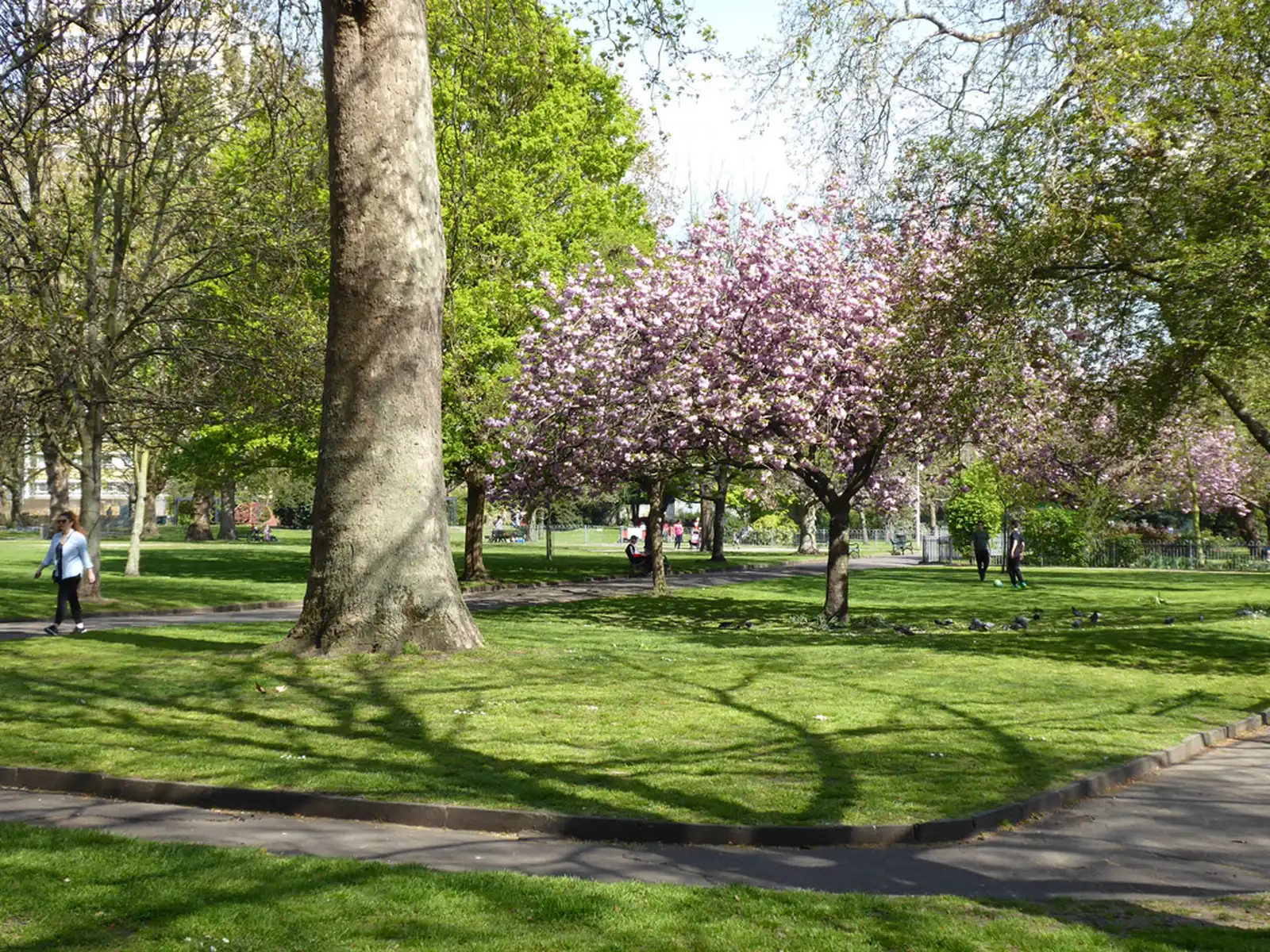
Vauxhall Park has more history than its size suggests. The land was saved from development in the 1880s by Millicent Fawcett, the leading Suffragist, in memory of her husband Henry, and the layout was designed by Fanny Wilkinson, one of the first professional female landscape gardeners in Britain. The park opened in 1890. That gives the park a more deliberate feel than most small London squares, even now. The planting is mature, the paths are properly laid, and the place has a sense of being looked after that some larger Lambeth parks don't quite match.
For dog owners the practical draw is the enclosed exercise area on the western side, just north of the café. It is not large, but secure off-lead space in north Lambeth is scarce, so the size matters less than the existence. The rest of the park is compact: a Fawcett Sensory Garden added in 2020, a lavender garden on the site of a former bowling green, and, half-hidden in the planting near the centre, a miniature mock Tudor model village made by a retired engineer from West Norwood in the late 1940s. Six small concrete houses, easy to miss in summer.
Nearest station: Vauxhall. Enclosed dog exercise area on the western side, just north of the café. Dog-free around the playground.
Norwood Park
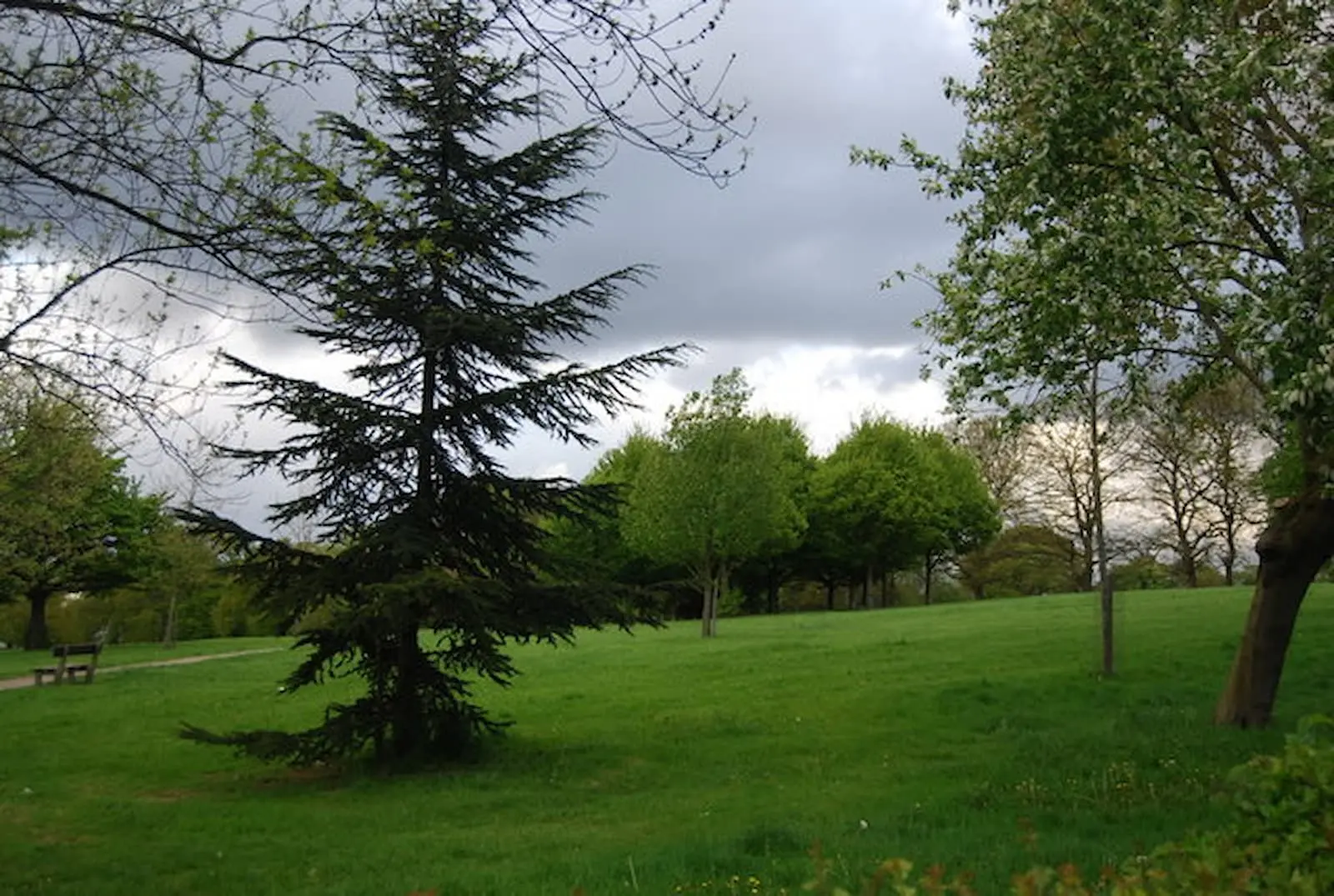
Norwood Park sits high up at the southern edge of the borough, and the views across South London from the top are the best of any park in this guide. On a clear day the skyline runs east to west across the horizon. For a borough most people associate with Brixton and the river, that's a different proposition entirely.
The park is part of the historic footprint of the Great North Wood, an ancient woodland that once stretched from Deptford to Selhurst across what is now South London. Most of it was lost to development from the 1850s, but pockets remain in the parks, cemeteries and railway embankments of the area, and London Wildlife Trust has been restoring them. Norwood Park's tree-lined Country Walk, its fenced wildlife pond and its native hedging share a planting philosophy with that wider work. It has more ecological character than most inner-London parks and the difference shows in the variety of birdlife and the way the planting matures.
There are no tube stations within easy walking distance, which is part of why Norwood Park stays quieter than the parks further north. Gipsy Hill is around fifteen minutes on foot. Most local owners arrive by bus or from the surrounding streets.
Nearest station: Gipsy Hill (15 minutes' walk). Off-lead across the main open areas, on-lead near the playground and the wildlife pond. Community café on site, dog-friendly outside.
A note on the rules
Lambeth operates a Public Spaces Protection Order that covers dog behaviour across its parks. The practical points worth carrying in your head: no more than four dogs per person in public spaces, no more than two off-lead at once for private owners, and licensed commercial walkers up to six. Dog fouling fines apply across the borough. Children's play areas are dog-free in every park, without exception.
These are reasonable rules and most owners follow them without thinking. The licensing system for commercial walkers is worth knowing about if hiring one: a Lambeth-licensed walker has been checked and is operating legally in the parks. An unlicensed walker working a Lambeth park is not.
Choosing between them
If a dog needs to meet other dogs, Clapham Common on a Sunday morning. If the walk needs to do something for the human as well, Brockwell at sunrise, Streatham Common with a stop in The Rookery on the way down, or Norwood Park on a clear afternoon for the views. If the priority is getting out before work and keeping the dog tired, Kennington Park or Ruskin Park, depending on which side of the borough you live on. If recall is the issue, Myatt's Fields or Vauxhall Park, and a longer walk somewhere open once the dog has earned it.
The point of having a borough this varied is that no two days need to look the same.
Looking for a dog walker, trainer or groomer in Lambeth? Pawthority lists vetted local providers across all seven services. Browse the Lambeth directory.