 Pawthority
About dog walking in Hammersmith & Fulham
Hammersmith and Fulham is one of the most professional-heavy boroughs in London, with a working population concentrated around Hammersmith Broadway, the offices of White City and the financial commute into central London. Around half of households here live in flats and another quarter in converted houses, which leaves a small share of homes with proper private outdoor space. That housing pattern, combined with long commutes and hybrid working, is the single biggest driver of dog walking demand. Owners are out of the house through the working day and need someone reliable to bridge the middle of it, particularly in flat-heavy pockets across Fulham and around the regenerated streets of White City.
The borough also has more genuinely useful green space than its compact size suggests, with Wormwood Scrubs in the north, Bishop's Park along the Thames in Fulham and Ravenscourt Park sitting between them. That mix shapes the local market in a specific way: flat-based households generate steady weekday demand for shorter solo walks and small group cover, while owners closer to the major parks lean more toward longer route-based walks for active dogs. Most professional walkers here run small, carefully matched groups rather than larger packs, partly because of borough rules and partly because crowded urban parks make tight control essential.
Typical dog profiles and walking patterns
The most common profile in Hammersmith and Fulham is a flat-dwelling companion dog, often a French Bulldog, Staffie or smaller crossbreed, paired with a young professional or working family whose schedule makes a midday walk impossible without help. Active family dogs in the terraced streets near the larger parks make up the other significant share of the market, with Labradors and similar working breeds generating consistent demand for proper hour-long group walks. Rescue dogs are common across the borough, particularly around Shepherd's Bush and the denser Hammersmith corridors, and these often need structured pack walks as much for behavioural support as for exercise. Group walks of three to four dogs are the most common product, with the borough's four-dog cap shaping the local market more than it does in some neighbouring areas. Solo walks make up a meaningful share of demand, particularly for reactive dogs, older dogs and puppies still building confidence on busy urban routes. Most local walkers will want to meet a new dog and ask carefully about temperament, recall and tolerance for other dogs before agreeing to fold them into an existing group, and that screening process matters here more than in quieter outer boroughs.
Popular walking locations
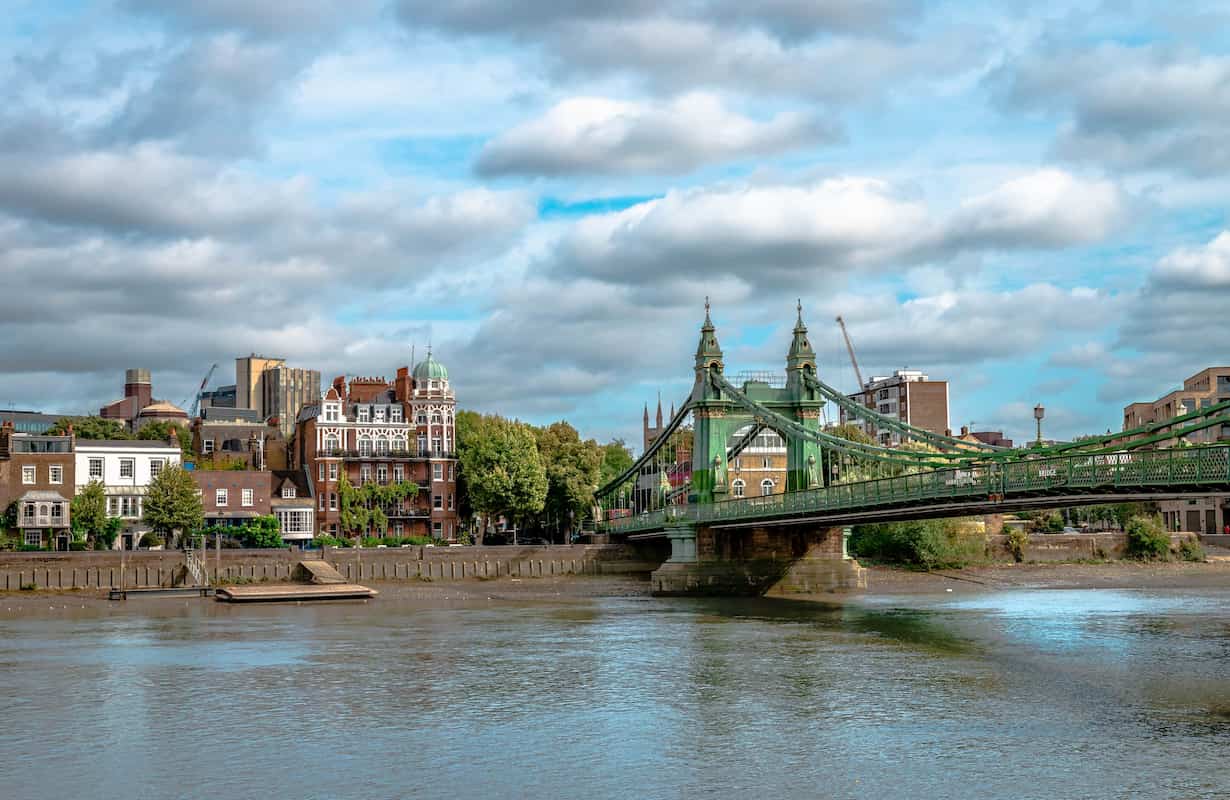
Wormwood Scrubs is the standout open space in the borough, offering seventy-seven acres of grassland and scrub on the northern edge of Hammersmith. It is the obvious choice for higher-energy group walks and proper off-lead distance, though the nature reserve sections demand lead control and walkers should know which parts of the site are restricted. Ravenscourt Park sits closer to the residential heart of Hammersmith, with its medieval moat lake, mature trees and varied sniffing circuits making it a strong fit for everyday weekday cover, though dogs are excluded from the fenced sports courts and playgrounds. Bishop's Park runs along the Thames in Fulham and is one of the most useful walking routes in the borough, with riverside paths that stay cooler in summer and a steady flow of regulars across the working day. The formal gardens within Bishop's Park are dog-free, but the riverside sections and open lawns work well for both solo and small group walks. Brook Green provides a compact local option in central Hammersmith, with on-lead requirements near the playground and useful proximity to cafes for post-walk stops, while Parsons Green offers smaller open areas suited to pre-work fetch sessions in the heart of Fulham. The Thames Path itself runs from Hammersmith Bridge through to Chiswick and gives walkers a long scenic option for solo bookings, though tidal mud and busy summer footfall both shape how it can realistically be used.
Local requirements and standards
Hammersmith and Fulham operates a Public Spaces Protection Order that caps the number of dogs one person can walk at four, applicable to all walkers including professionals. Dog fouling carries a £100 fixed penalty notice, reduced to £60 if paid promptly, and authorised officers can require a walker to produce poo bags on request. Dogs are banned from playgrounds, sports pitches, multi-use games areas, cemeteries and designated wildlife zones, and leads can be required by an officer if a dog is aggressive or out of control. Some commons and conservation areas also carry seasonal nesting restrictions, which professional walkers operating across multiple sites need to track rather than assume the borough-wide PSPO covers everything. Beyond the rules, the markers of a properly set up dog walker in Hammersmith and Fulham are the same as elsewhere in London. Public liability insurance is essential because it covers accidents, damage and incidents involving other dogs or members of the public, and most reputable insurers tie cover to a stated maximum group size that matches the borough's four-dog cap. A DBS check matters because walkers routinely hold keys and enter homes unaccompanied, and that is the dominant pickup pattern in flat-heavy Fulham and the Hammersmith corridors. Pet first aid training is the other meaningful credential, particularly for walkers using the Thames Path and Wormwood Scrubs where heat stress, paw injuries and the occasional river or crowd incident are all more likely than on quiet suburban paths. Membership of a professional body such as NARPS UK, willingness to share references, and a clearly stated cap on group size are all reasonable things to ask about before booking, and any walker worth using will be comfortable answering all of them.
Neighbourhood insights
Fulham generates the highest volume of demand around Bishop's Park, with affluent commuter households, school-run families and a steady rental population all relying on professional walkers to bridge the working day. The mix of period flats, converted houses and small terraces here means private outdoor space is limited even where homes look generous from the street. Hammersmith Broadway and the surrounding office district drive a different pattern, with lunch-hour walks particularly important for flat-based professionals working from home or returning briefly through the day. White City and the streets around the BBC campus and Westfield generate a more concentrated picture of midday solo cover, helped by the regenerated high-rise developments and a young, hybrid-working population. Puppy socialisation walks are particularly common here, with first-time owners in new flats often turning to professional walkers for both exercise and structured social contact for younger dogs. Across all of these areas, the underlying driver is the same: a working week long enough that even households with some outdoor access need a reliable hand in the middle of the day.
Seasonal considerations
Hammersmith and Fulham's reliance on a small number of flagship parks means seasonal pressure shows up quickly. Bishop's Park and the Thames Path fill with runners, families and office workers in good weather, and good local walkers tend to push group walks earlier in the morning or shift toward Ravenscourt's quieter circuits when the riverside gets too crowded. Heat stress is a real concern on the more exposed sections of Wormwood Scrubs and the open Thames Path stretches, and walkers covering the borough properly will adjust pace, distance and route choice through the warmer months rather than running their usual schedule unchanged. Winter brings the opposite challenge. Shorter afternoons push group walks earlier in the day, and the open ground at Wormwood Scrubs churns up quickly after the heavy rain that typically rolls through the borough from late autumn onward. Brook Green and the better-lit residential loops pick up much of the load when the bigger spaces are too wet or too dark to use cleanly, and fog along the Thames Path can also reduce visibility enough that walkers will sensibly route group walks away from the river on poor mornings. Good local walkers will keep a set of well-lit residential and park backup routes for the days when the main spaces are difficult.
Areas covered
- Fulham
- Hammersmith Broadway
- Shepherd's Bush
- White City
- Brook Green
- Parsons Green