 Pawthority
About dog training in Merton
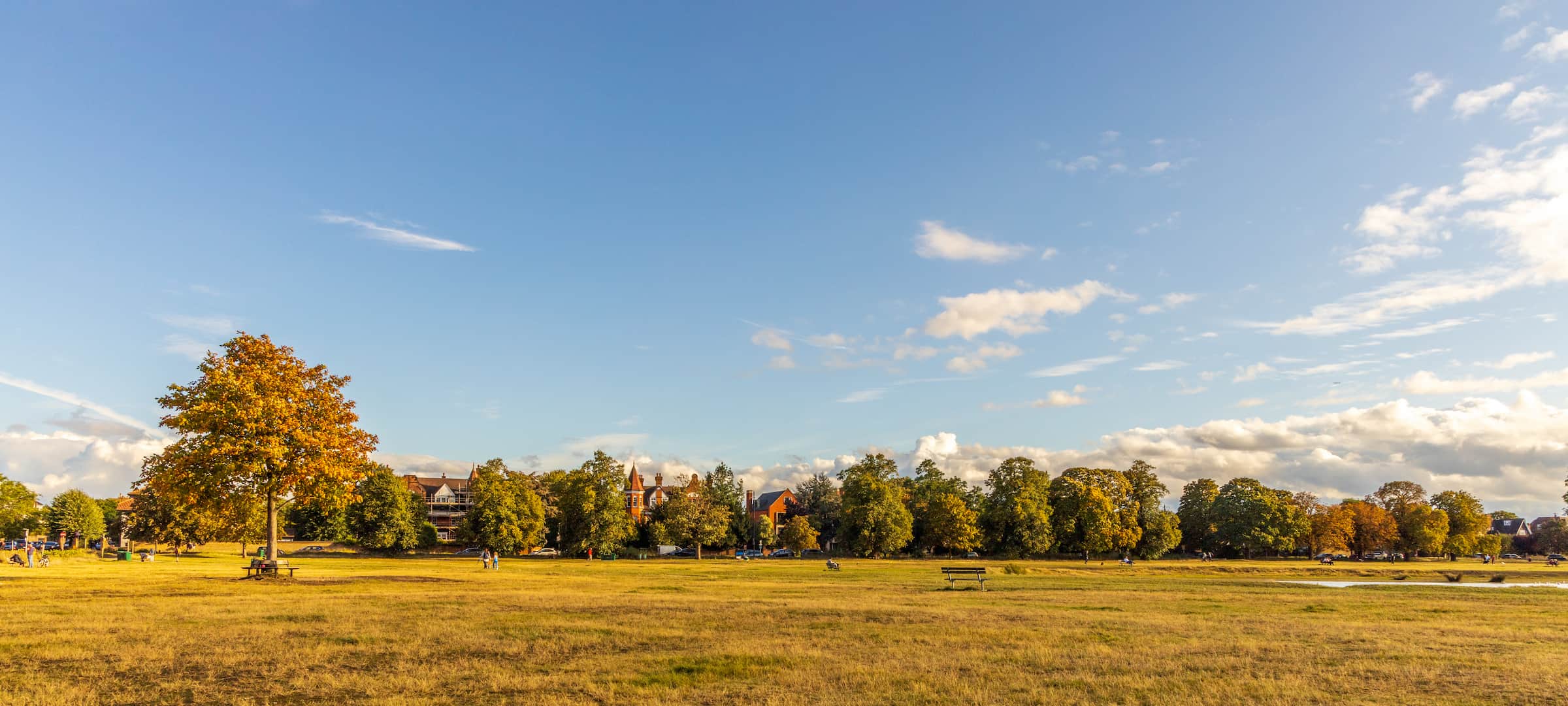
Merton is one of outer south-west London's more prosperous boroughs, anchored by Wimbledon Village at its affluent end and stretching through the family-oriented streets of Raynes Park and Merton Park to the flatter, denser residential areas of Colliers Wood and Mitcham. Housing is predominantly Victorian and Edwardian semi-detached and terraced houses with rear gardens, which means dogs here are generally better integrated into domestic life than in many inner-London boroughs, but the borough's strong commuter culture creates its own training pressures. Both Raynes Park and Wimbledon stations serve London Waterloo, and Colliers Wood and Morden sit on the Northern line, meaning a significant proportion of Merton's dogs spend long stretches of the day alone while their owners commute. What makes Merton particularly distinctive for dog training is the quality and scale of its green space: Wimbledon Common at 1,140 acres is one of the largest urban commons in England, and its ecological sensitivity introduces seasonal rules that shape how owners and trainers use it for six months of every year.
Common behaviour challenges
The training needs that come up most consistently in Merton reflect the borough's combination of active outdoor lifestyle and commuter-heavy household routines. Recall reliability near deer and wildlife is a specific and recurring concern, particularly for owners using Wimbledon Common and Morden Hall Park where on-lead discipline near ponds and wildlife areas is required for a substantial part of the year. Adolescent impulse control in Labradors, Spaniels and Golden Retrievers is among the most frequently cited challenges, as these high-energy gundog breeds dominate the breed profile in the Wimbledon and Raynes Park areas and can become genuinely difficult adolescents without structured training. Loose-lead walking on the busy shopping strips of Wimbledon town centre and Colliers Wood High Street is a practical everyday concern for many owners, and separation anxiety is consistently raised by trainers serving the Wimbledon and Raynes Park corridor where commuting households are the norm. In the flatter, denser parts of the borough around Colliers Wood and Mitcham, first-time owners in flats and newer build-to-rent properties generate steady demand for puppy socialisation, urban-walking support and crate training foundations.
Popular training locations
Wimbledon Common is the borough's dominant training venue, with 1,140 acres of open heathland and dense woodland that suit every stage of training from beginner recall to advanced distraction work. The sheer scale of the Common means trainers can move between genuinely quiet pockets and busier areas depending on what a dog needs at any given stage. The critical thing to know for training purposes is that dogs must be kept on lead around all ponds and on The Plain during the bird nesting season from 1 March to 31 August, and the previously permitted allowance of up to six dogs per walker has been rescinded, with the byelaw now capping any one group at four dogs. Morden Hall Park is a 125-acre National Trust estate with meadow paths, riverside routes and a dog-friendly cafe in the Stableyard, making it an excellent venue for combining obedience work with cafe-settling practice. Dogs are off-lead on most of the grounds but must be on lead in the Rose Garden, around the cafe and along the Wetland Boardwalk, which creates a natural structure for practising calm on and off-lead transitions alongside varied wildlife distractions. Mitcham Common's 460 acres of ancient common land offer wide open terrain and light visitor numbers that make it particularly well-suited to distance recall work and building off-lead confidence without city-level distraction. Cannon Hill Common between Morden and Raynes Park provides 140-year-old mature woodland that works well for distraction and scent-tracking exercises, while Wimbledon Park's lakeside paths around the rowing lake offer a more contained, lower-distraction environment for intermediate loose-lead and focus work.
Local requirements and standards
Merton's Dog Control Public Spaces Protection Order applies across all council-managed open spaces in the borough. Dog fouling must be cleared immediately, and failure to do so can result in a Fixed Penalty Notice with non-payment leading to prosecution and a fine of up to £1,000. The PSPO limits any one person to a maximum of four dogs at a time in all public open spaces, and this limit applies to groups as well: three people walking together cannot exceed four dogs between them. Children's play areas, fenced sports areas, multi-use games areas, outdoor gyms, bowling greens and skate parks are all designated dog-exclusion zones, and authorised officers can require any dog to be put on lead at any point if it is not under adequate control. Wimbledon Common and Putney Heath are governed by separate Wimbledon and Putney Commons Conservators byelaws rather than the council PSPO. Dogs are broadly welcome off-lead across the Common but must be on lead around all ponds and kept to mown paths on The Plain during the bird nesting season from 1 March to 31 August. When choosing a trainer, ABTC registration is the most important single credential to verify, alongside IMDT or APDT membership and an unambiguous commitment to force-free, reward-based methods. Canine first aid certification is worth confirming for any trainer working in large open spaces like Wimbledon Common or Morden Hall Park where veterinary help is not immediately accessible. Useful questions to ask include which professional body the trainer is registered with and whether that membership can be verified online, whether they ever use corrections or aversive tools, and whether they have specific experience with the breed or behaviour challenge you are dealing with.
Neighbourhood insights
Wimbledon Village and West Wimbledon sit at the premium end of training demand in the borough, with large detached and semi-detached houses, affluent families keeping gundogs and retrievers, and direct access to the Common. The combination of wealth, ecological sensitivity in the nearby green space and a strong local dog community creates consistent demand for accredited, experienced one-to-one trainers. The Wimbledon Common Dog Community is an active local hub that reflects just how engaged this part of the borough is around dog ownership. Raynes Park and Merton Park represent the family heartland of the borough, with Victorian semis, a strong school-run culture and a Northern line commuter demographic where adolescent recall training and structured family-dog obedience are the dominant requests. Colliers Wood and Mitcham are the borough's flat-dwelling pockets, with modern apartments, converted Victorian terraces and a younger renting demographic around Merton Abbey Mills and the surrounding streets where first-time owners need urban-walking support, crate training and puppy socialisation from the outset. Home-visit training is particularly practical in these areas, where working on real-life scenarios in the owner's own flat and on the specific streets they use daily produces faster and more transferable results.
Seasonal considerations
The bird nesting season on Wimbledon Common runs from 1 March to 31 August, which means on-lead discipline around the pond areas and The Plain is required for six months of every year. Rather than a frustration, experienced local trainers treat this period as a consistent and valuable driver for on-lead manners work, using the enforced restrictions to build the loose-lead and focus foundations that make the rest of the year's off-lead training more effective. The Wimbledon Championships in late June and early July dramatically changes the character of the SW19 area each year, bringing heavy pedestrian and traffic congestion to Wimbledon town centre and the surrounding streets that makes reactive-dog and loose-lead work significantly more challenging. Trainers who know the borough well typically plan around the Championships fortnight rather than working through it. Winter brings the expected challenges of shorter daylight, with sunset before 4pm in December limiting evening outdoor sessions, and muddy paths across Mitcham Common and Cannon Hill Common pushing demand toward home-visit training and indoor hall-based puppy programmes through the colder months.
Areas covered
- Wimbledon Village
- Wimbledon
- Raynes Park
- Merton Park
- Colliers Wood
- Mitcham
- Morden