Pawthority
Dog training in London

Find trusted dog trainers in Lambeth

6 screened dog trainers in Lambeth. Compare them here, then contact them from their profile.

Google ratings
4.9 to 5.0
Dog training in Lambeth

6 dog trainers in Lambeth

Ordered by Google rating, then number of reviews. Businesses whose main service is something else are listed after.

  1. Paws and Pause

    Rated 4.9 out of 5 from 79 Google reviews

    Brixton, 5 years in business

    • Social enterprise
    • 1:5 ratio
    • Enrichment-based care
  2. Pets with Problems

    Rated 4.9 out of 5 from 73 Google reviews

    Streatham, 10 years in business

    • Clinical animal behaviourist
    • Evidence-based practice
    • Force-free methods
  3. South London Dog Training

    Rated 4.9 out of 5 from 44 Google reviews

    Brixton

    Claimed

    • behaviour training
    • Relationship focused
    • 3-4 session results
  4. Beyond Reactivity

    Rated 4.9 out of 5 from 43 Google reviews

    Brixton, 3 years in business

    • ABTC registered
    • One-to-one training
  5. Fluffies

    Rated 5.0 out of 5 from 27 Google reviews

    Clapham, 7 years in business · Mainly dog walking

    • Canine first aid certified
    • Fully insured
    • Family-run business
  6. Sean Hyden

    Rated 4.9 out of 5 from 34 Google reviews

    Herne Hill · Mainly dog walking

    • Ethical methods
    • Licensed trainer
    • Bespoke consultations

New listings on Pawthority need a Google rating of 4.5 or higher, at least 5 Google reviews and a review from the last 12 months.How screening works

About dog training in Lambeth

Lambeth, London

Lambeth is the seventh most densely populated borough in London outside the City, with about 318,000 people in 27 square kilometres. Council rules on dogs apply across its parks and streets, and several parks have dog exercise areas set apart from the rest. A trainer who works locally should know where these are and what is expected of a dog on the way in and out.

Lambeth's dog rules

Lambeth has a borough-wide Public Spaces Protection Order covering dogs on council land, including parks and highways. An authorised officer can tell an owner to put a dog on a lead and keep it there. In parks, dogs must be on a lead or kept out of play areas, ponds, water-play areas, sports facilities, walled gardens, picnic areas and café seating.

Dogs walked in Lambeth's parks need to come back when called and then walk on a loose lead past these areas.

Dog exercise areas

Kennington Park has two dog exercise areas, one in the north of the park and one in the south. Vauxhall Park's is on the west side, just north of the café. Myatt's Fields has a small one in the north-west corner, north of the tennis courts. Hillside Gardens has one alongside a children's playground and a dog-free picnic area.

These areas are useful for recall practice and for teaching a dog to meet other dogs politely in a confined space.

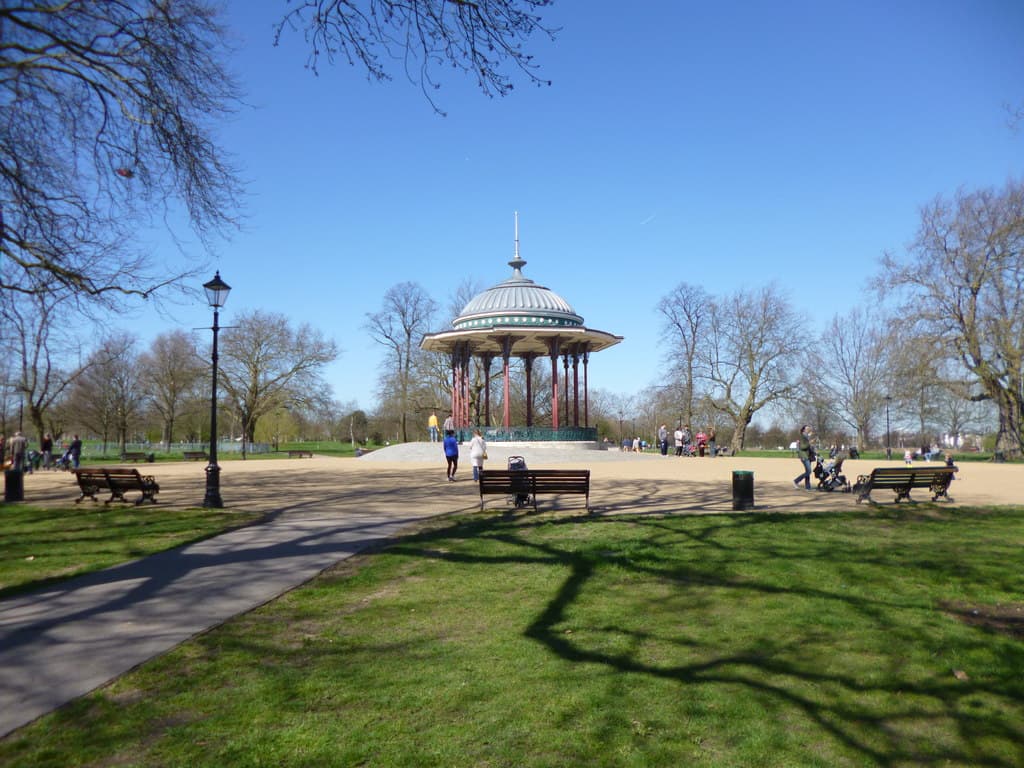
Clapham Common and Brockwell Park

More than half of Clapham Common lies in Wandsworth, but Lambeth owns and manages all of it, so Lambeth's park rules apply across the Common. It has three ponds, two woodlands, meadows and a wetland beside Eagle Pond, as well as playgrounds, a paddling pool and sports facilities. Large music events are held there in summer.

At Brockwell Park, dogs must be on a lead or kept out of the ponds, BMX track, bowling green, walled garden, play area and wet-play area. The park also hosts the Lambeth Country Show each summer.

Recall should be reliable around water, wildfowl, bikes and crowds before a dog is let off in either park.

Living in a flat

Toilet training in a flat has to allow for a lift or several flights of stairs between the front door and the street. Dogs also need to wait quietly in shared hallways and at doorways, and to settle when left alone, because barking carries through shared walls.

Buses, trains and town centres

Dogs travel free on TfL with a paying passenger and must be on a lead at all times. Waterloo and Vauxhall are major interchanges for the Tube, National Rail and buses, and Brixton and Stockwell are busy Underground stations. A dog that uses public transport needs to walk on a short lead through ticket gates, wait calmly on platforms and at bus stops, and settle under or beside a seat without blocking anyone. Short-lead walking matters on the shopping streets in Brixton and Streatham too.

Areas covered

  • Brixton
  • Clapham North
  • Kennington
  • Streatham
  • Vauxhall
  • Stockwell
  • Herne Hill

Dog training prices in Lambeth

Dog training prices in London vary depending on the type of training, session length, and whether it's group-based or one-to-one. Based on local listings, dog owners can typically expect:

Estimated London price ranges
Group classes
Puppy classes (per session)around £15–£30
Course packages (5-6 weeks)around £140–£220
One-to-one sessions
Single session (1 hour)around £80–£125
Package deals (5-6 sessions)around £400–£480
Behaviour consultations
Single consultationaround £80–£165
Specialist programmes (e.g. reactivity)around £480–£720

Prices may vary for specialist behavioural work, in-home training, or intensive programmes. Many trainers offer package discounts for multiple sessions.

Each provider sets their own prices, so owners are encouraged to contact trainers directly to confirm availability and exact costs.

Questions about dog training

How much does dog training cost in London?

Dog training in London typically costs £80–£125 per hour for one-to-one sessions, though prices vary depending on the trainer's experience and location. Group classes are more affordable, usually ranging from £15–£30 per session. Many trainers offer package deals for multiple sessions, which can reduce the overall cost if your dog needs ongoing work. Contact trainers directly for a quote based on your dog's needs.

What's the difference between group classes and one-to-one training?

Group classes are ideal for socialisation and teaching basic obedience in a distraction-filled environment, which is great for puppies and dogs that need to learn to focus around other dogs. One-to-one training gives your dog the trainer's full attention and is better suited to specific behavioural issues, reactive dogs, or owners who prefer a tailored programme. Many trainers recommend starting one-to-one and transitioning to group classes once the basics are solid.

How many sessions will my dog need?

Most dogs show noticeable progress within four to six sessions, but the total number depends on your dog's age, temperament, and what you're working on. Basic obedience typically requires fewer sessions than behaviour modification for reactivity or aggression. Consistency at home between sessions matters just as much as the training itself because dogs learn through repetition.

What should I look for in a dog trainer?

Look for a trainer accredited by a recognised body such as the APDT (Association of Pet Dog Trainers) or one who holds a qualification from the IMDT or COAPE. Accreditation means they've met professional standards and follow a code of conduct. Beyond credentials, ask about their experience with your dog's breed or specific issue, and ensure their approach is transparent and positive.

What training methods should a good trainer use?

A reputable trainer should use force-free, reward-based methods, reinforcing the behaviours you want rather than punishing the ones you don't. Avoid trainers who rely on choke chains, prong collars, or aversive techniques, as these can increase anxiety and worsen behavioural problems. The RSPCA and most professional bodies now recommend positive reinforcement as the gold standard for dog training.

Can a dog trainer help with reactive or aggressive behaviour?

Yes, many professional trainers specialise in reactivity and aggression. These cases typically require one-to-one sessions and a structured behaviour modification programme rather than standard obedience classes. If your dog has shown aggression towards people or other animals, look for a trainer with specific experience in this area. Some cases may also benefit from a referral to a clinical animal behaviourist.

When should I start training my puppy?

You can start basic training as soon as your puppy comes home, usually around eight weeks old. Simple commands like sit, stay, and recall can be introduced straight away using short, positive sessions. Puppy classes are typically open to dogs from around 12 weeks (usually one week after their second vaccination) and are a great way to combine socialisation with early training during a critical developmental window.

Dog training across London

25 boroughs
Enfield, not listed yet Harrow, not listed yet Waltham Forest, not listed yet Hillingdon, not listed yet Redbridge, not listed yet Hounslow, not listed yet City of London, not listed yet Barking & Dagenham, not listed yet

Train dogs in Lambeth?

If you meet the screening rules, you may already be listed. Claiming your listing is free, with no commission and no paying for leads.

Claim your listing