 Pawthority
About dog training in Kensington & Chelsea
Kensington & Chelsea is one of London's most distinctive boroughs for dog ownership, combining exceptional wealth, extreme density and a housing stock where around four in five properties are flats. With owner-occupation at just under 32% and private renting accounting for nearly half of all households, the vast majority of dogs in the Royal Borough live without a private garden, relying entirely on parks, pavements and shared outdoor spaces for their daily exercise and enrichment.
That context creates a very particular set of expectations: owners here tend to want dogs that are genuinely polished in public, calm in cafe settings, reliable off-lead in Royal Parks and manageable in the shared lobbies and lifts of mansion blocks and converted Victorian buildings. The borough's affluent, career-focused demographic also means separation during long working days is a daily reality for many dogs, making structured training not a luxury but a practical necessity.
Common behaviour challenges
The training requests that come up most consistently in Kensington & Chelsea reflect the pressures of high-end urban flat living. Separation anxiety is among the most frequently raised concerns, particularly among professional commuter households where dogs spend significant portions of the day alone in flats without outdoor access. Lead frustration on busy streets like King's Road and Kensington High Street is another recurring issue, as is under-stimulation indoors for dogs whose exercise opportunities are limited by their living environment. The borough's breed trends skew visibly toward companion and status dogs, with Cavapoos, Miniature Goldendoodles, French Bulldogs, Dachshunds and Cocker Spaniels among the most commonly seen. These breeds are popular for good reasons in a flat-dwelling context, but they are also prone to separation anxiety, barking and resource-guarding when under-exercised or under-stimulated, which makes early and consistent training particularly valuable. Puppy socialisation in shared residential buildings is a specific challenge that comes up regularly, and rescue dog rehabilitation is in steady demand across the borough's denser private rental wards.
Popular locations for training
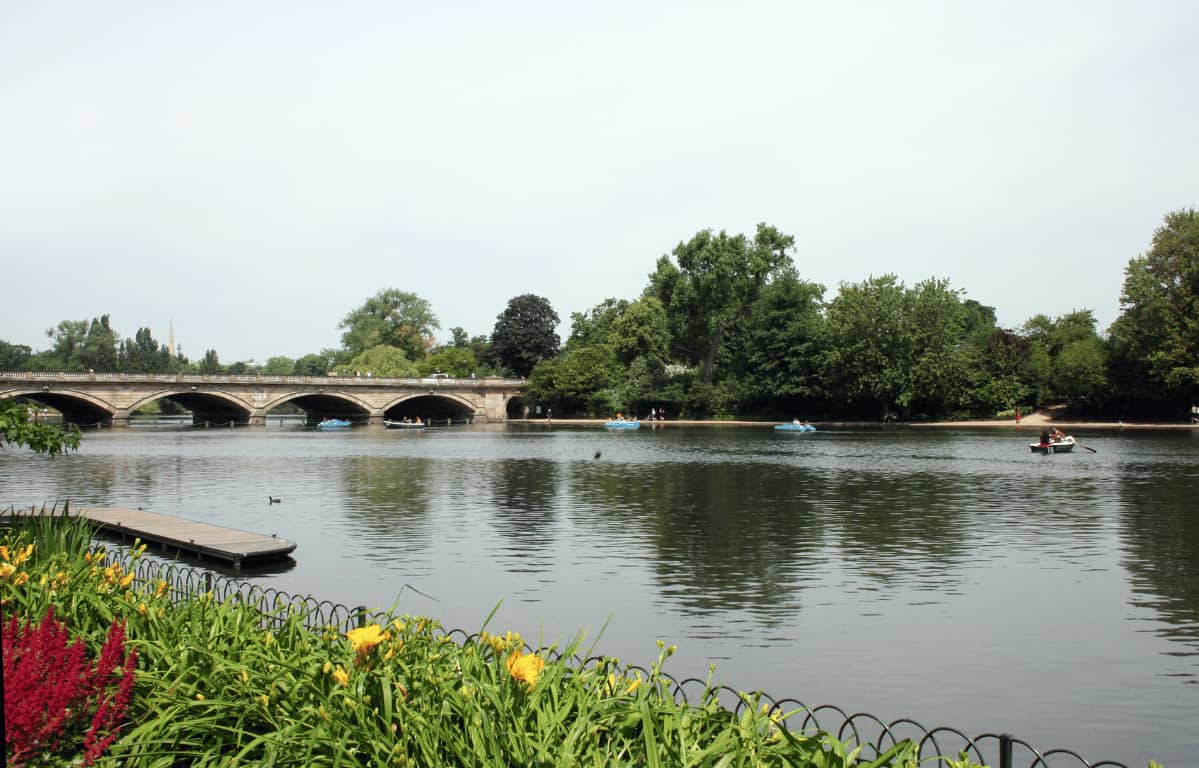
Kensington Gardens is the borough's standout outdoor training venue, with 265 acres of open Royal Park offering vast lawns, the Round Pond and the edges of the Serpentine lake for recall work and group socialisation sessions. It is worth knowing that any commercial dog walking or training activity in Kensington Gardens requires a Royal Parks licence, and credible local operators will hold one. Licensed walkers are limited to groups of four dogs, which keeps sessions manageable and safe in what can be a very busy environment during warmer months. Holland Park offers a more layered training environment, with peacock woodland, open playing fields and the formal Kyoto Garden, which is entirely dog-free and must be avoided. The woodland section is well-suited to distraction and focus work, while the open areas allow for recall practice before moving to more stimulating environments. Brompton Cemetery in Earl's Court provides quiet, tree-lined paths and minimal foot traffic, making it one of the most useful low-distraction venues in the borough for anxious dogs building initial confidence. Avondale Park in Notting Hill, though small, has an enclosed perimeter fence and a designated dog exercise area that makes it particularly practical for puppy classes and urban lead-manners work. The streets along the Chelsea Embankment and the surrounding cafe terraces are regularly used by trainers for settling-on-mat and impulse control practice in realistic public settings.
Local rules and what to look for in a trainer
RBKC Parks Police list dog control and dog fouling among their five active enforcement priorities, and patrols are a genuine presence across the borough's green spaces. Dog fouling must be cleared immediately, and fines are actively enforced. Dogs must be kept on leads in the formal gardens and woodland sections of Holland Park, and the Kyoto Garden is entirely off-limits to dogs. Redcliffe Square Gardens and all park playgrounds across the borough are also dog-free zones. Kensington Gardens, as a Royal Park, requires any commercial operator to hold an official Royal Parks licence, and it is reasonable to ask any trainer who proposes working there to confirm they hold one. When choosing a trainer, ABTC registration is the most important single credential to verify, as it confirms independently assessed professional standards. IMDT membership requires passing practical assessments and a commitment to force-free methods, while APDT membership indicates a long-established code of conduct. In a borough where anxious dogs in high-density environments are particularly common, a clear and unambiguous commitment to reward-based methods with no aversive tools is especially important. A canine first aid certificate and professional insurance are both worth confirming before sessions begin. Useful questions to ask include whether the trainer is ABTC-registered and can share their membership number, whether they hold a Royal Parks licence if sessions are proposed in Kensington Gardens, and how they adapt if a dog shows fear or shuts down during a session.
Neighbourhood insights
Notting Hill and Holland Park generate the highest volume of training demand in the borough, where wide Georgian terraces attract affluent families keeping active gundog breeds and medium-sized pedigrees with direct access to Holland Park and Kensington Gardens. Training needs in these areas tend to focus on off-lead reliability, advanced recall and socialisation with the full range of people and dogs these parks present on a busy weekend. Chelsea and Brompton have a notably high proportion of older owner-occupiers, with a significant number of single-person older households whose dogs benefit from gentle loose-lead and manners programmes rather than intensive behaviour modification. South Kensington, Earl's Court and pockets of North Kensington contain the borough's highest concentration of private renters in converted Victorian flats, where first-time owners with puppies or rescue dogs most frequently seek puppy life-skills support, urban walking classes and help managing dogs in shared building environments. Home-visit training is particularly valued across these areas, where working on real scenarios in the owner's own flat and on the specific streets they use daily produces the most transferable results.
Seasonal considerations
Summer is the most challenging season in Kensington & Chelsea from a training perspective. Kensington Gardens and Holland Park become heavily crowded with tourists, school groups and visitors drawn by outdoor events, making recall around unfamiliar people and dogs significantly harder to maintain. The Notting Hill Carnival in late August transforms large sections of the borough into an extremely high-stimulus environment for an entire weekend, and trainers often advise keeping dogs indoors or arranging boarding during the Carnival period rather than attempting to manage them in the streets around it. Winter brings shorter daylight hours, wet paths through Holland Park woodland and reduced outdoor cafe options, shifting demand firmly toward home-visit training and indoor manners programmes. The borough's many mansion blocks and purpose-built flats make in-home work particularly practical in colder months, and demand for separation anxiety support and indoor enrichment planning tends to increase through autumn and winter as commuter households return to full working schedules.
Areas covered
- Notting Hill
- Chelsea
- Earl's Court
- South Kensington
- Kensington
- Holland Park
- Brompton